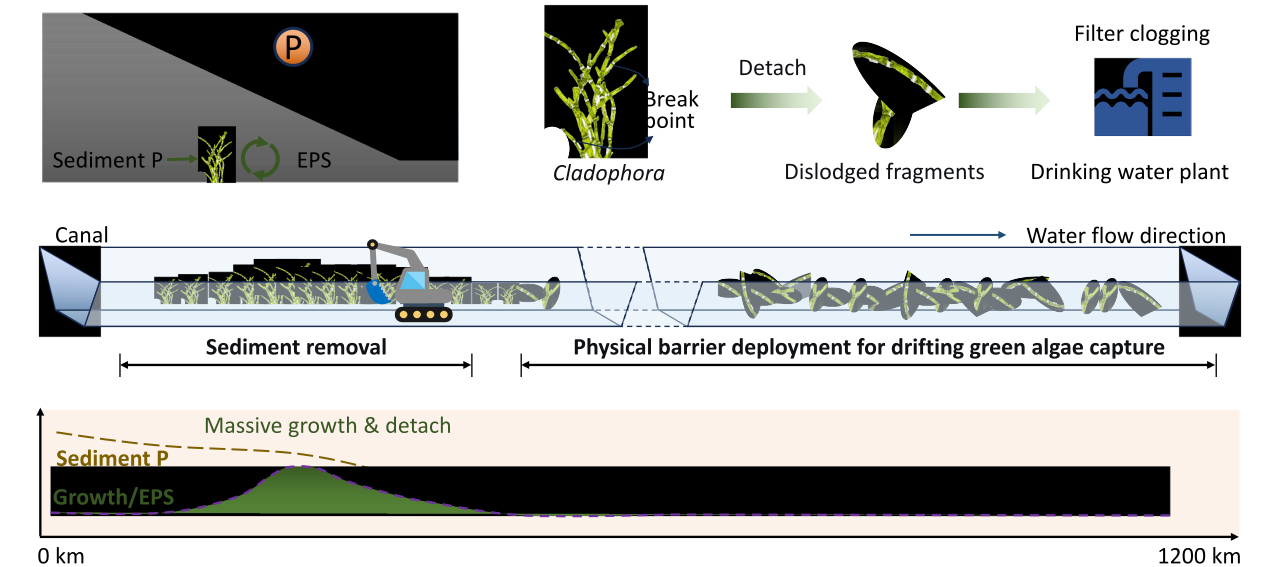
Phosphorus fuels Cladophora growth and self‑reinforcing adhesion via extracellular polysaccharides on hard substrata
Abstract
Although high flow velocity, low nutrients, and smooth concrete surfaces typically suppress benthic algae, the filamentous alga Cladophora formed extensive biofilms in a major water transfer canal under conditions typically unfavorable for benthic algal colonization, leading to filter clogging and challenging the operational stability of drinking-water treatment for 180 million people. Here, we quantified Cladophora biomass, extracellular polysaccharides (EPS), and nanoscale adhesion through field surveys along the 1197 km canal, laboratory P‑enrichment experiments. P enrichment increased acid‑extracted polysaccharides (APS) yield per biomass by 21.6 %, and native EPS–sediment adhesion reached 18.6 nN, with polysaccharide backbones contributing ~88%. Along the canal, APS and sediment P were positively associated (\(p < 0.01\)) and both peaked at 30–45 cm depth. These results support a positive feedback mechanism in which APS strengthens adhesion and promotes local retention of P-bearing particles, potentially increasing phosphorus accessibility at the algal–matrix interface and further stabilizing the biofilm. The same biofilm can detach and cause downstream clogging. This self‑reinforcing mechanism explains the spatial persistence of Cladophora blooms and provides a predictive basis for managing risks in large‑scale water conveyance systems.