
Spatiotemporal decoupling of littoral and lacustrine geosmin dynamics: Implications for early warning in drinking water reservoirs
Supplementary Material
# These authors contributed equally to this work.
a College of Environmental Science and Engineering, Ocean University of China, Qingdao 266100, China.
b Key Laboratory of Environmental Aquatic Chemistry, State Key Laboratory of Regional Environment and Sustainability, Research Center for Eco-Environmental Sciences, Chinese Academy of Sciences, Beijing 100085, China.
c Tianjin Hydraulic Research Institute, Tianjin 300061, China.
d Tianjin Yuqiao Reservoir Authority, Tianjin 301900, China.
e Institute of Hydrobiology, Chinese Academy of Sciences, Wuhan 430070, China.
f University of Chinese Academy of Sciences, Beijing 100049, China.
* Corresponding to: Ming Su (mingsu@rcees.ac.cn)
Summary: 11 pages, 9 figures and 1 table.
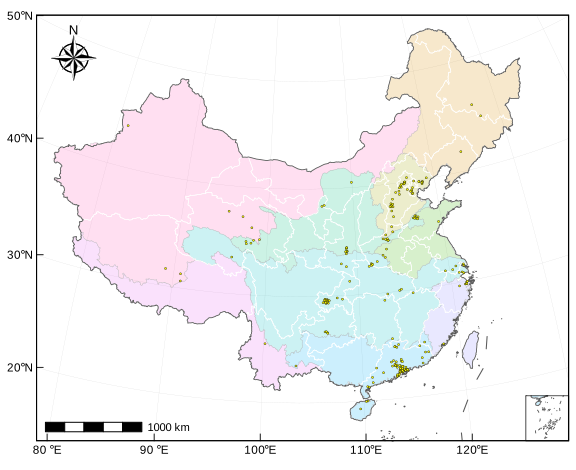
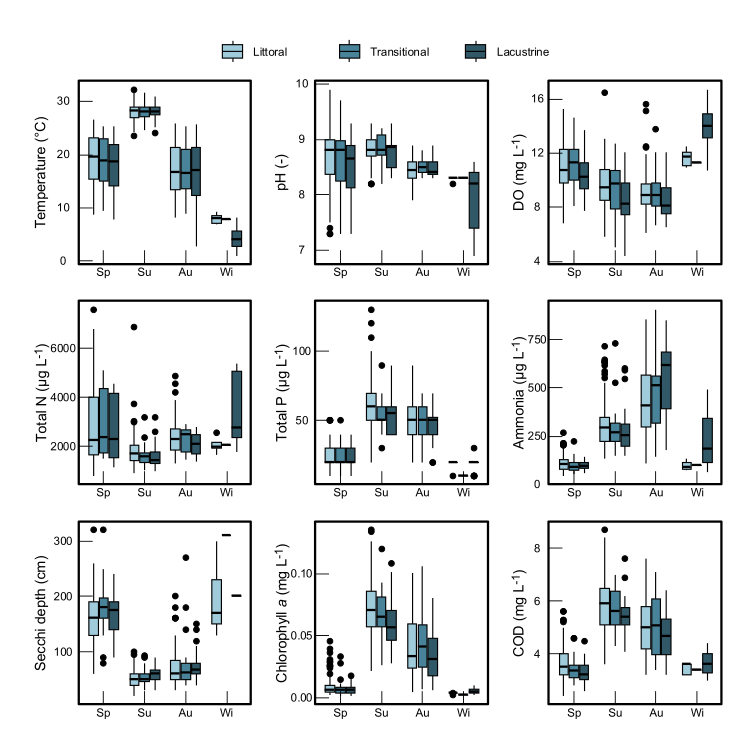
Supplementary Fig. 1
Supplementary Fig. 2
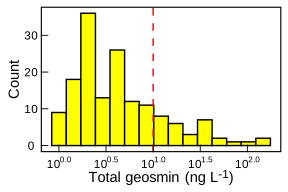
Supplementary Fig. 3
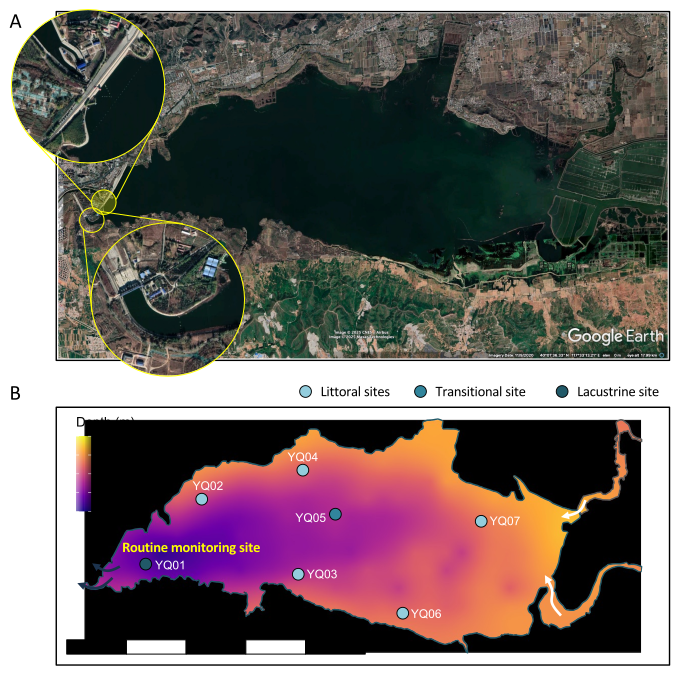
Supplementary Fig. 4
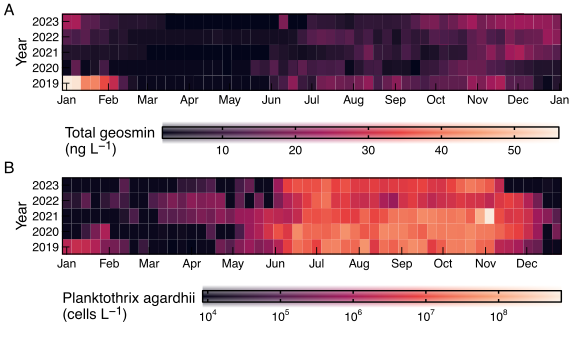
Supplementary Fig. 5
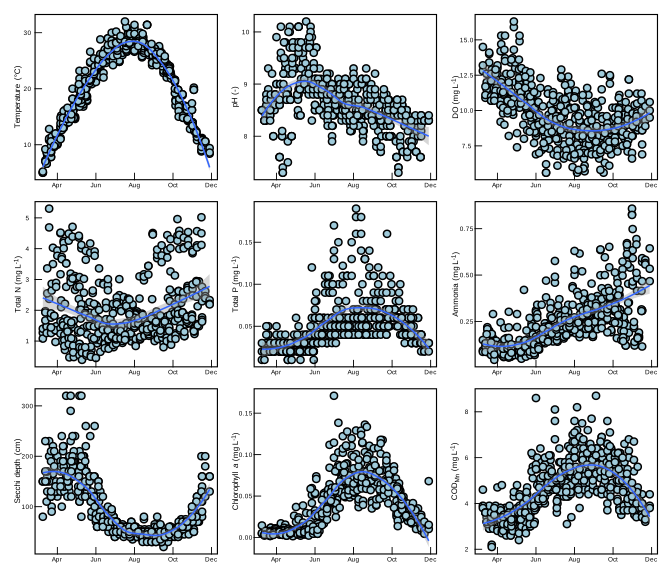
Supplementary Fig. 6
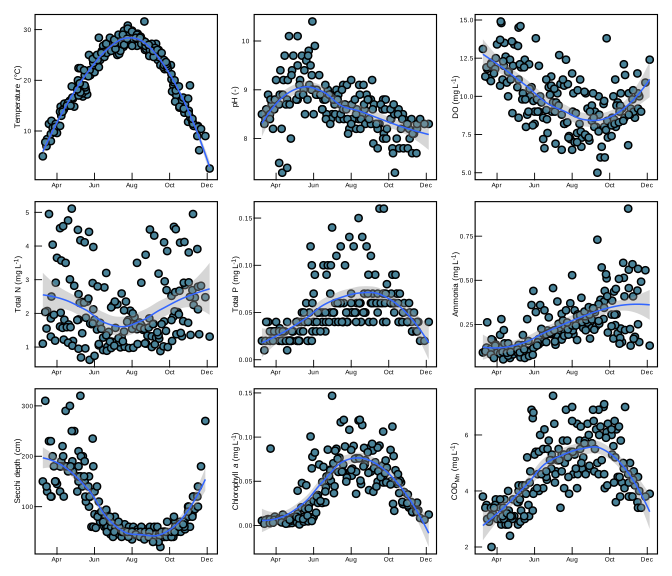
Supplementary Fig. 7
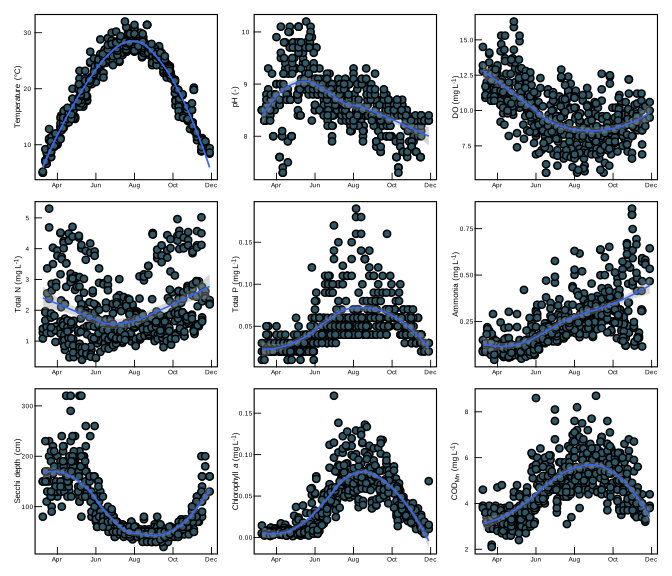
Supplementary Fig. 8
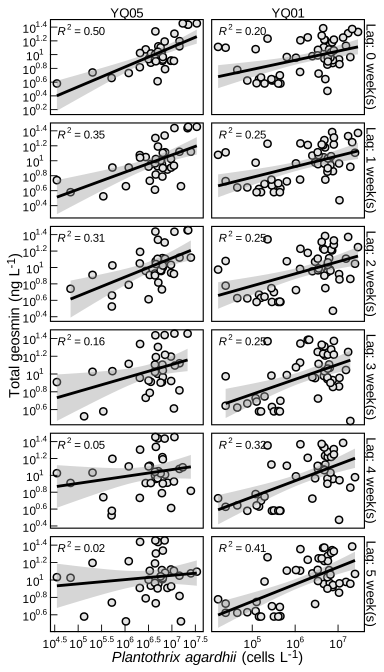
Supplementary Fig. 9
Supplementary Table 1
BLASTn alignment of the sequence fragment OTU156/214-360 (S8_19530; length: 147 bp), amplified from environmental samples using functional primers, returned its highest similarity hits predominantly to Planktothrix agardhii. The top-ranking hits, including strains PCC7805, No.365, No.66, PCC7811, No.2A, and str. 7805, all exhibited consistent, high-quality alignment characteristics: 100% Query Cover and sequence identity (Per. ident) above 98%.
Similarly, BLASTn alignment of the sequence fragment OTU58/293–447 (S7_36548; length: 155 bp) yielded top matches primarily to Aphanizomenon flos-aquae (WILD-4 geoA gene for geosmin synthase, partial cds; accession LC739799.1), multiple geoA or putative geosmin synthase gene sequences from Aphanizomenon gracile (e.g., NRERC-027: OQ819013.1; CHAB2417: MK213950.1; WH-1: KP268488.1; NRERC-023: OQ819011.1; NRERC-022: OQ819010.1), and Dolichospermum heterosporum (TAC447; accession CP099464.1). All these top hits displayed remarkably consistent and strong alignment metrics (Query Cover = 99%, Per. ident = 100%, E-value = 3e−73), indicating that this sequence fragment is highly homologous to geoA sequences associated with Aphanizomenon and shows an equally perfect match with certain sequences from Dolichospermum.
Sequencing fragments of water samples collect from YQ Reservoir

>OTU156/214-360 S8_19530
GTAATTTCTCTAATTTCCAACTTGTTCCATAAATTATGCCATCGTTAGTATAGCTGGTTT
TGTCATTAACATCCCCATTTAGAGGTAAATAGGCTAATAATCCTAGTTCATCGCCGACTA
AATGCCGATTCATGTCCTGTTTAATTT

>OTU58/293-447 S7_36548
CTGCCAATCCTGAAGTCCTTTGATGTAAAGGAGAACATTCACACGCTCTACTGGGTCTAC
TCCATACTCCTCAAAAAGGGAGGGCAACTCGGTGACAGCAGTGTTATCAAACTGATATAA
ACGGGAGTTGAGTAGTTCGTTAGTGAGGTTAGCCG
| OUT | Matched Species | Per. Ident (%) | Query Cover (%) | Accession |
|---|---|---|---|---|
| OUT156 | Planktothrix agardhii | 98.64 | 100% | LR882950.1 |
| OUT156 | Planktothrix sp. | 92.52 | 100% | CP136572.1 |
| OUT58 | Aphanizomenon flos-aquae, A. gracile, A. cf. flos-aquae | 100.00 | 99% | LC739799.1 |
| OUT58 | Dolichospermum heterosporum | 100.00 | 99% | CP099464.1 |
| OUT58 | Uncultured cyanobacterium | 100.00 | 92% | OR032742.1 |
| OUT58 | Aphanizomenon gracile, Aphanizomenon sp. | 98.70-99.35 | 99% | OQ819012.1 |
| OUT58 | Dolichospermum crassum, D. smithii, D. ucrainicum, D. planctonicum | 92.86-93.42 | 98-99% | LC739806.1 |